In portable industrial tools, cable performance depends on more than voltage and current ratings. A fine stranded conductor can help a cable bend through repeated tool movements, while handling flexibility affects how easily operators position, route, and store it. Understanding how these factors interact helps buyers specify a cable suited to the work pattern rather than choosing by appearance alone.
The practical question is how conductor construction and day-to-day handling influence service life, operator comfort, and reliability. For portable industrial tools used in workshops, maintenance areas, and mobile work zones, the right Flexible Cable should accommodate the actual bend pattern and movement frequency without compromising electrical or environmental requirements.
How conductor stranding affects repeated movement
Fine strands distribute bending across the conductor
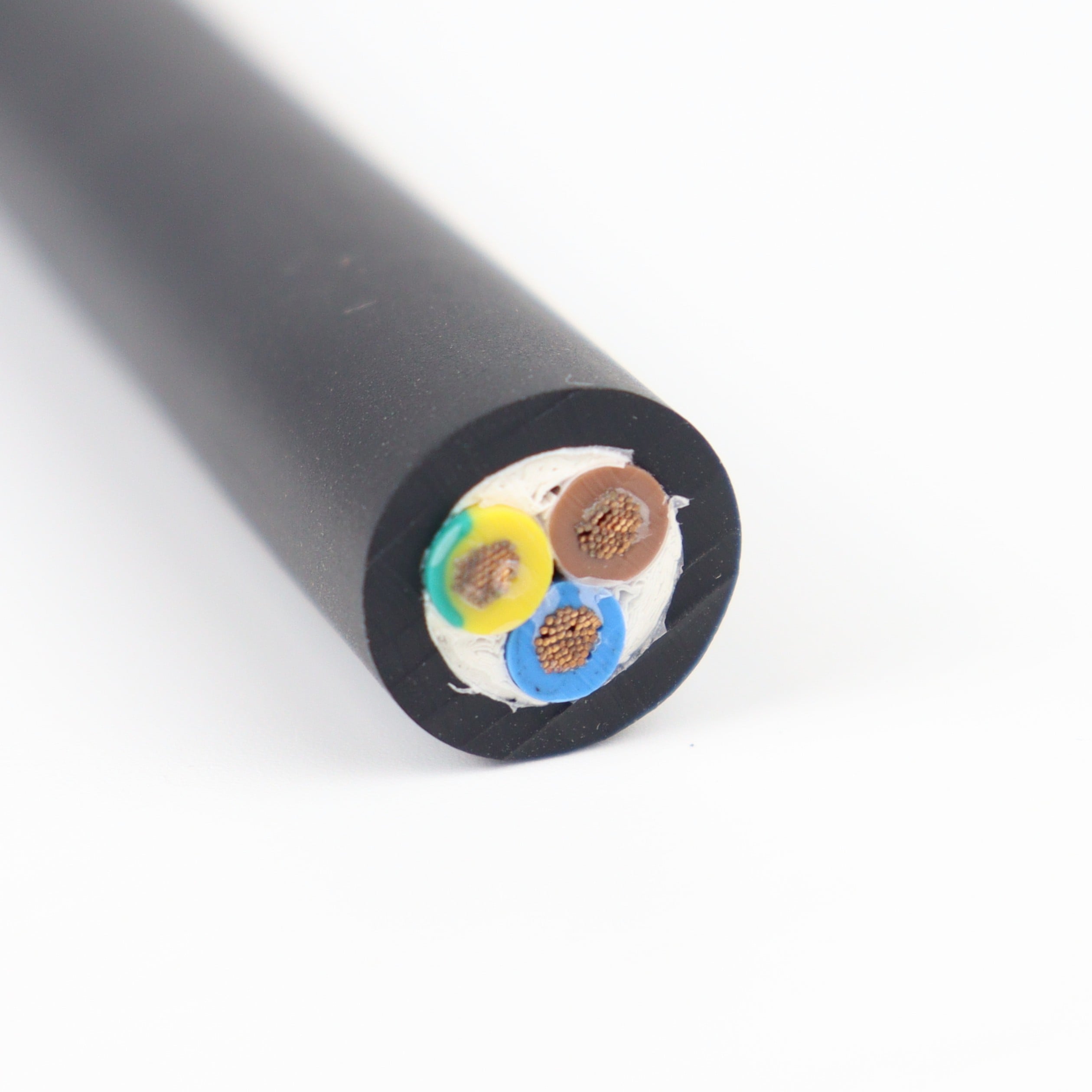
A fine stranded conductor consists of many small wires bundled together instead of a few larger strands or one solid core. As a cable bends, the small wires can shift relative to one another, distributing movement across the bundle. In portable industrial tools, that construction can make repeated routing more manageable, while handling flexibility reflects how the complete cable behaves in an operator’s hands.
Strand count alone does not determine suitability. Conductor size, strand arrangement, insulation, and outer sheath all influence how a fine stranded conductor responds to bending and twisting. Buyers should confirm the cable’s stated construction and electrical rating for the tool load; handling flexibility is useful only when the cable also meets current, voltage, and installation needs.
Movement pattern matters as much as the tool category. A handheld grinder may experience short, frequent bends near its entry point, while portable industrial tools on a mobile workstation may travel farther and encounter a larger bend radius. A fine stranded conductor supports flexible routing in either case, but the cable must be selected for the actual direction and frequency of movement.
Construction needs to work as a complete system
The conductor sits inside insulation and a sheath, so cable response is a combined effect. A fine stranded conductor cannot compensate for a jacket that resists the required bend, nor can handling flexibility make an undersized conductor safe for the load. Review the finished cable specification, including conductor area, insulation material, sheath properties, temperature range, and applicable approvals.
Tool connection points deserve particular attention because bending often concentrates near the handle or connector. A smooth route, adequate slack, and strain relief reduce avoidable stress. For portable industrial tools, evaluate the full path from the tool entry to the supply point, since tight turns or repeated pulling can limit handling flexibility regardless of the conductor design.
How handling flexibility affects work in the field
Routing and operator control depend on the work pattern
Handling flexibility describes practical ease of positioning, coiling, and moving a cable; it is not a substitute for a defined mechanical rating. On portable industrial tools, a cable that follows the operator’s motion can reduce snags around benches, fixtures, and temporary work areas. A fine stranded conductor can support this behavior, but the complete assembly and its dimensions remain important.
Consider how the cable will be carried between tasks, laid across a floor, or routed around a workstation. If operators must make frequent tight turns, confirm that the specified bend radius can be maintained. Handling flexibility should make normal routing easier, not encourage bending below the manufacturer’s limit or dragging the cable over sharp edges.
Storage is part of the duty cycle too. Portable industrial tools may be coiled after each shift, moved between service calls, or kept on a cart. A fine stranded conductor can suit repeated handling, while the sheath must tolerate the site’s abrasion, oils, moisture, and temperature exposure as applicable. Confirm those conditions rather than assuming all flexible constructions offer the same protection.
Installation choices preserve useful flexibility
Cable length, connector placement, and routing support affect how flexibility performs in practice. Excess length can create loops that snag, while too little slack may pull at the tool entry. Select a length that allows the intended work envelope, then secure the route without crushing the sheath or restricting movement around portable industrial tools.
Handling flexibility also depends on the cable being used within its rated environment. Heat, chemical contact, abrasion, and repeated impact can change sheath condition over time. A fine stranded conductor addresses the conductor’s response to bending, not every external hazard, so assess insulation and jacket compatibility alongside the expected motion and tool load.
How to assess cable fit before specifying
Match construction to duty and electrical demand
Begin with the tool’s electrical requirements: operating voltage, current, conductor size, and connection method. Then describe how the cable moves during a typical task, including bend locations, pull direction, travel distance, and whether it is moved while energized. For portable industrial tools, this duty profile gives context to the fine stranded conductor and handling flexibility requirements.
Next, check the product documentation for conductor construction, rated voltage, temperature limits, sheath material, and any relevant approvals. Confirm that the cable is suitable for the intended environment and installation. A flexible design should not be treated as automatic approval for continuous flexing, drag-chain operation, or exposure to conditions not stated in its specification.
Finally, inspect a representative sample in the intended setup where practical. Route it through the real workspace, check that connectors remain secure, and observe whether the bend radius is respected during ordinary use. This review helps reveal whether handling flexibility is adequate and whether the selected fine stranded conductor and sheath suit the work cycle.
Use inspection findings to refine the specification
During service, look for cuts, flattening, exposed conductor, loose terminations, discoloration, or unusual stiffness. These signs may point to abrasion, overheating, excessive bending, or chemical exposure. Portable industrial tools should be removed from service when cable damage creates an electrical or mechanical hazard, following the facility’s inspection and replacement procedures.
If recurring wear appears at the same point, address the cause rather than simply choosing a more supple cable. Reposition the route, add suitable strain relief, protect contact points, or adjust the work method. Reassessing handling flexibility with those changes can improve fit, while conductor and sheath specifications still need to satisfy the tool’s electrical and environmental demands.
FAQ
Does a fine stranded conductor make every cable suitable for constant movement?
No. A fine stranded conductor can accommodate bending, but suitability for continuous movement depends on the complete cable design and its stated ratings. For portable industrial tools, verify the permitted duty, bend radius, sheath, and installation conditions instead of relying on strand construction alone.
How can handling flexibility be evaluated before purchase?
Compare the specification with the actual route, tool motion, and environmental exposure, then assess a sample in the intended setup when possible. Handling flexibility should support ordinary routing for portable industrial tools without forcing tight bends or compromising strain relief.
What should prompt a cable specification review?
Repeated sheath damage, stiffness, connector strain, or snagging are reasons to review routing and selection. Check whether the fine stranded conductor, jacket, and rated bend conditions match the real duty, and confirm that handling flexibility remains appropriate for the work environment.

 EN